

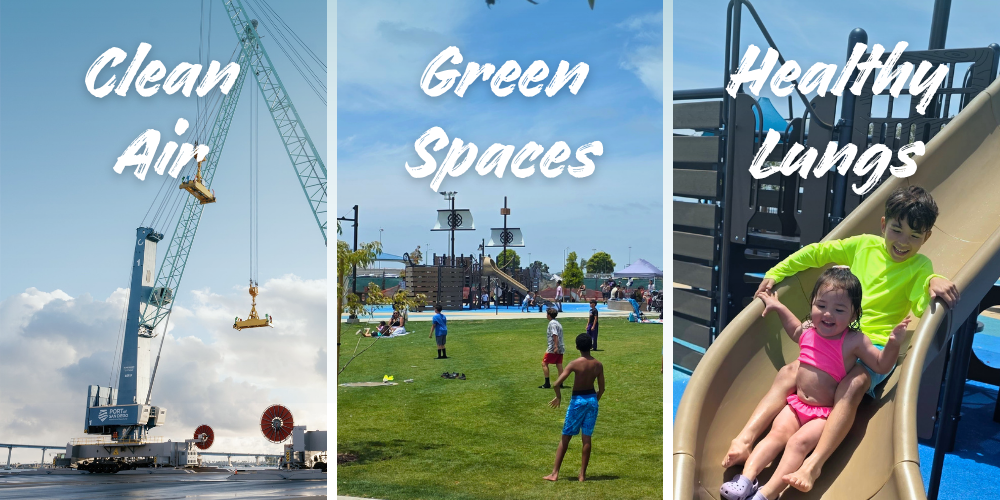
Welcome to the summer edition of the Healthy Portside Community Newsletter! This newsletter is part of EHC’s partnership with the Port of San Diego to inform and engage Portside residents on the Port’s Clean Cargo Project (CCP). In this newsletter, you’ll read about the San Diego Unified School District’s (SDUSD) electric school bus rollout, meet a Barrio Logan elder advocating for a healthier Portside, learn about Zucarmex – the Port’s first cargo operation to use only electric trucks – and get updates on the CCP. Keep an eye out for the fall edition of the newsletter in the coming months!
What’s in the Summer Edition?
- Meet Roberto Corral, an elder fighting for clean air for the next generation
- Zucarmex: 1st cargo operation using only electric trucks
- Clean Cargo Project updates
- Interview: SDUSD is on its way to 93 electric school buses
- Upcoming events
Meet Roberto Corral, an elder fighting for clean air for the next generation
“We are doing this for the children, above all else. We older folks don’t have much time left, so doing this for them is the real benefit — it’s what we’re fighting for.”

Roberto Corral is a long-time Barrio Logan resident. He lives with his wife in the Barrio Senior Villas Apartments. Señor Corral first got involved with EHC in 2019 to stop New Leaf Biofuel, a business across the street from his apartment, from producing a terrible odor that was making residents sick, including Señor Corral and his wife. He has stayed involved, and last year joined the Portside Community Action Team (CAT).
“Right now, we’re dealing with the pollution here at the Port—it’s a very serious situation. My wife really struggles with the pollution; she has allergy issues. We’re older now. Her lungs flare up, and she starts having trouble breathing — it’s like asthma. She feels it in her throat, her chest, and her bronchial tubes—that’s where she suffers. But still, thank God, we’re hanging in there.”
“We [Portside CAT] want the Port to listen to the people, because people aren’t asking for things just for the sake of it; they are asking because of what they are living through and feeling. Above all, what we are proposing is switching the trucks and all the cargo vehicles here in the Portside area to electric trucks and asking the government to support truck owners—or those in the industry—in making the switch from diesel and other polluting systems to electric ones. We are doing this for the children, above all else. We older folks don’t have much time left, so doing this for them is the real benefit — it’s what we’re fighting for.”
If you are interested in learning more about the Portside CAT and how you can join, contact Monserrat Hernández at MonserratH@environmentalhealth.org.
Zucarmex, first cargo operation to use electric trucks only
Eliminating approximately 1,000 diesel truckloads per month from terminal operations.
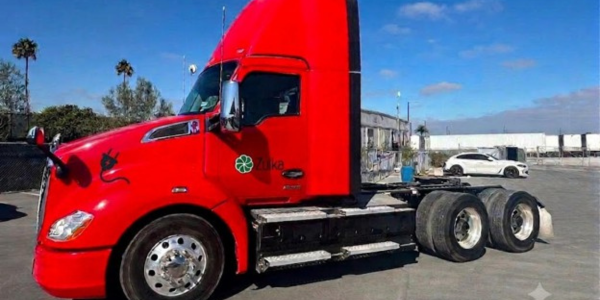
In June, the Port of San Diego Board of Port Commissioners approved the development of a new bulk sugar handling and storage facility for Zucarmex at the Tenth Avenue Marine Terminal. It will be the first cargo operation at the Port to use only electric trucks, and they will be charged by rooftop solar. This exemplifies the type of innovative projects the community has been advocating for – a project that both reduces pollution and supports economic development.
The approved project includes:
- The use of Class 8 ZEV (electric) semi-trucks to transport raw sugar from the terminal to the company’s existing Otay Mesa processing facilities. This will eliminate approximately 1,000 diesel truckloads per month from terminal operations.
- A rooftop solar system to provide a renewable power source to support on-site truck and equipment charging.
- Best available control technologies for the conveyor system and bulk discharge unloader with features to ensure, at minimum, 95 percent particulate emission control.
Clean Cargo Project Updates
Out with the fuel, in with the electric
The CCP is a transformative project to reduce harmful air pollution in Portside communities by electrifying Port operations and supporting zero-emission (pollution-free) heavy-duty trucks and cargo-handling equipment.
Tenth Avenue Marine Terminal (TAMT)
- SSA Marine will issue a purchase order for 17 pieces of new all-electric ZE cargo handling equipment, including 1 reach stacker, 11 forklifts, and 5 utility tractor rigs (UTRs), to replace fuel-burning equipment that will be permanently scrapped.
- On June 12th, three of the 10 ZE UTRs Dole Fresh Fruit Company is purchasing arrived. The remaining seven are expected to arrive later this calendar year.
- Construction has started on Phase 4 of the Tenth Avenue Marine Terminal (TAMT) 12-kV modernization, which includes:
- upgrading the electrical system that loops around the terminal to support the chargers needed for the ZE equipment and shore power,
- 12 charging units and supporting infrastructure, and
- 1 shore power outlet for commercial harbor craft.
Tidelands Avenue Electric Truck Hub
- On June 30, 2026, the National City Council voted to send a letter of support to the Board of Port Commissioners for the project.
- On August 11, 2026, the Board anticipates voting on certifying the Environmental Impact Report. What’s next? The Board will hear public testimony and will vote on approving the project this summer.
National City Marine Terminal
- The Pasha Group is expected to issue purchase orders in the fall for the first round of ZE equipment. Altogether, Pasha is procuring 20 ZE medium-duty shuttle vans and 5 pieces of ZE cargo-handling equipment.
- The Pasha Group is issuing a request for proposals (RFP) for a design-build contractor to build 18 charging stations and supporting electrical infrastructure.
Students Breathe Easier: Electric school buses reduce pollution and generate workforce opportunities.
“We currently estimate that replacing 30 diesel buses will save around 101,000 gallons of diesel annually, prevent 660,500 grams of PM2.5 from tailpipe emissions, and save 845 metric tons of CO2 emissions annually.”
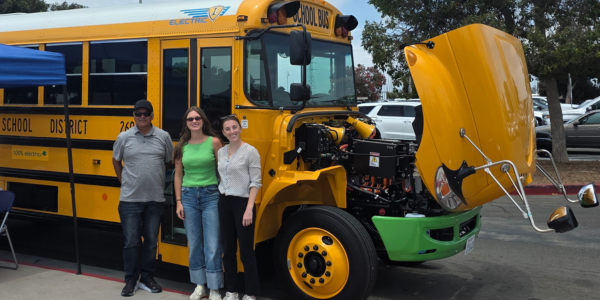
San Diego Unified School District (SDUSD) is on its way to having 93 electric school buses by the end of the year. Currently, the District has 43. Of those, 13 are on the road taking children to and from school, while the District prepares the remaining 30 for their routes. Recently, SDUSD received funding for another 50 electric school buses from the State’s Zero-Emission School Bus and Infrastructure Program.
To learn more about the SDUSD’s electric bus fleet and its benefits, we spoke with Grace Leslie from the Center for Transportation and the Environment (CTE). Through her role at CTE, Grace works as a project consultant with SDUSD on their clean school bus initiative.
This interview has been edited for length and clarity.
Can you share the history of San Diego Unified School District’s electric bus fleet and what the goal is?
In 2020, the SDUSD was awarded $9.7 million from the California Air Resources Board, through a Clean Mobility In Schools program. Through that award, the District procured 13 electric school buses.
CTE is currently working with the District on the Clean School Bus Program (CSBP), which is a $12.4 million award from the Environmental Protection Agency to purchase and deploy 30 electric school buses. The District purchased the school buses and they are currently being inspected. And, drivers are going through the workforce training that needs to happen before the buses can be fully deployed to take students to school.
Some of the larger initiatives and goals for the District is to reach 100% zero emission, and there’s also the California mandate that legally requires 100% of all newly purchased early school buses in the state be zero emissions starting January 1st of 2035.
As part of the district’s goal is to provide safe and reliable transportation for students, they are really interested in deploying electric buses in the areas they are needed most. They are being placed in the Skyline and Barrio Logan areas first. These are the communities that experience some of the most severe impacts from climate change and pollution. It’s a goal of San Diego Unified to reduce these impacts and improve the health and safety of the community.
How many electric school buses does San Diego Unified currently have?
With these 30 that are now on site, that adds up to 43. SDUSD just received funding for an additional 50 electric school buses from the State’s Zero Emission School Bus and Infrastructure Program (ZESB). They’re purchasing the additional 50 buses by the end of this year, so then they’ll have 93 electric school buses.
What are the benefits of e-buses for the district, students, and the overall community?
There are a lot of environmental and health benefits. ZEV buses are really great for addressing poor air quality, especially in disadvantaged communities near the Port of San Diego. SDUSD’s initial electric school bus project, that included the transition to the 13 initial ZEV buses, mitigated nearly 490,000 kilograms of CO2. That is the equivalent of removing 106 passenger vehicles from the road for a year.
Part of our [CTE’s] work includes collecting data on the buses for 12 months after they deploy and with that will come more accurate emissions savings calculations based on the mileage. Our initial estimates are that replacing 30 diesel buses will save around 101,000 gallons of diesel annually, prevent 660,500 grams of PM2.5 from tailpipe emissions, and save 845 metric tons of CO2 emissions annually.
Diesel exhaust from school buses is harmful to students’ health and puts them at risk for cancer and asthma. The electric school buses help eliminate tailpipe emissions from their diesel counterparts. The effects of diesel exhaust on students on a school bus are even more potent because they sit on the bus for extended periods of time and are subject to the pollutants while riding.
Along with air quality benefits, other benefits include that electric buses are more efficient than diesel buses, which saves energy overall. Electric school buses also decrease noise pollution, which has been proven to harm children’s performance and attendance. SDUSD has also communicated to us that their routes often serve children with special needs, who benefit even more from a quiet ride. Additionally, electric school buses save on maintenance and fuel costs which free up budget for SDUSD’s schools to invest in other areas.
What has been the community reception of the e-buses?
The community response has been very, very positive, and interactive. The District has been doing a lot of engagement to spread more awareness around this work. At all the events we’ve done, there’s a lot of questions from the community about the long-term plans for expanding EV bus service.
One of the things we’re working on in this EPA grant is developing curriculum for students within San Diego Unified that teaches them a little bit about how electric school buses work, the different career pathways that exist in the future of electric vehicles and give them the skills to be able to work on the maintenance of them. A couple of the schools within San Diego Unified have transportation workshop programs. They work hands-on to develop the skills that you need to work on the maintenance end. There’s a lot of ways that this is adding workforce development opportunities for students
Have there been any challenges rolling out the e-bus fleet?
Yes, although I’d say the challenges haven’t been any different because they’re electric buses, necessarily. Some of the bigger challenges right now in the district are staffing concerns for drivers and maintenance tax. There’s been a big push to get relationships with local community colleges in areas where they can get more techs that have the background to service EVs. I think a challenge that the whole school bus industry is facing is making sure there is a workforce to support it. The district wants to make sure that all of the appropriate safety measures are in place before the buses are actually on the road and picking up students. So, there’s been some delays there, but it’s all with safety in mind.
Does the district have plans to expand the electric school bus fleet?
Yes, so the California ZESB program is the biggest next step. We currently are still in the process of putting the 30 extra electric school buses that arrive this year into service and getting the infrastructure and charging systems set up to support them. San Diego Unified has plans to continue procurements and continue progressing to their 100% zero-emission goal.
Is there anything I didn’t ask you that you think is important for people to know or that you want to share?
Another thing I would highlight is that this project supports workforce development through a lot of different training for SDUSD’s current staff and sets up training to prepare the younger generation to enter the workforce. There are some partnerships with the local community colleges to set up the training pipelines for the workforce that happens at San Diego Unified. I think there’s just a lot of great aspects to the program and efforts that San Diego Unified is working on that goes beyond just, putting these buses into service, it also addresses some of the wider community needs.
Upcoming Events
Upcoming Portside Community Action Team (CAT) Meetings
The CAT normally meets on the last Wednesday of every month. Dates and locations are subject to change. For up-to-date information and to attend, please email. You can also visit our events calendar.
- August 26, 2026, 5 PM – 7 PM
- September 30, 2026, 5 PM – 7 PM
- October 28, 2026, 5 PM – 7 PM
- November 18, 2026, 5 PM – 7 PM