
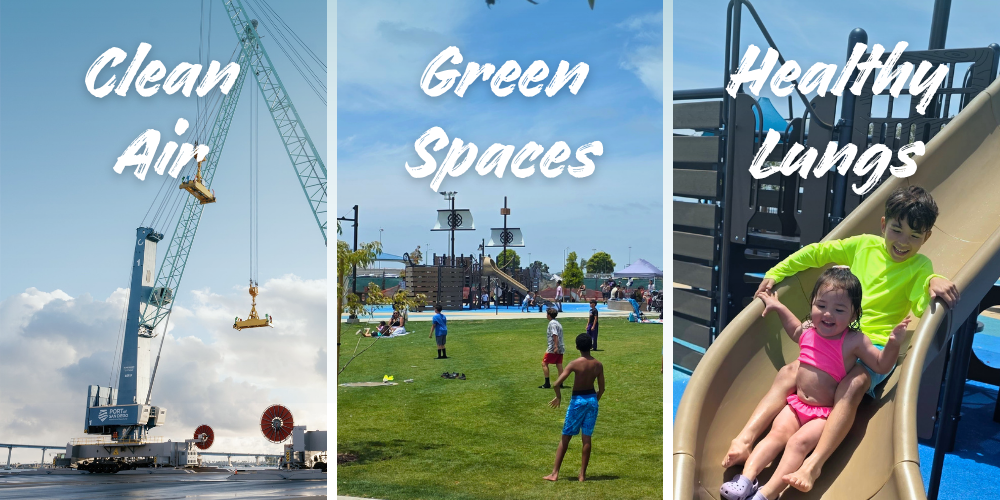
Welcome to the spring edition of the Healthy Portside Community Newsletter! This newsletter is part of EHC’s partnership with the Port of San Diego to inform and engage Portside residents on the Port’s Clean Cargo Project (CCP). In this newsletter, you’ll read about the transition from operating diesel–polluting cranes to the 1st all electric cranes in North America, meet a National City mother advocating for a healthier Portside, and get updates on the CCP. Keep an eye out for the summer edition of the newsletter in the coming months!
What’s in the Spring Edition?
- Meet Margarita Moreno, a mother fighting for a healthy Portside
- SAVE THE DATE: Electrify for Clean Air: Summer Resource Fair
- Clean Cargo Project updates
- Interview: From diesel cranes to the 1st all electric cranes in North America
Meet Margarita Moreno, a mother fighting for a healthy Portside
“I just want my family and neighbors to have cleaner air so that we can breathe easily and go out for walks without the risk of getting sick.”
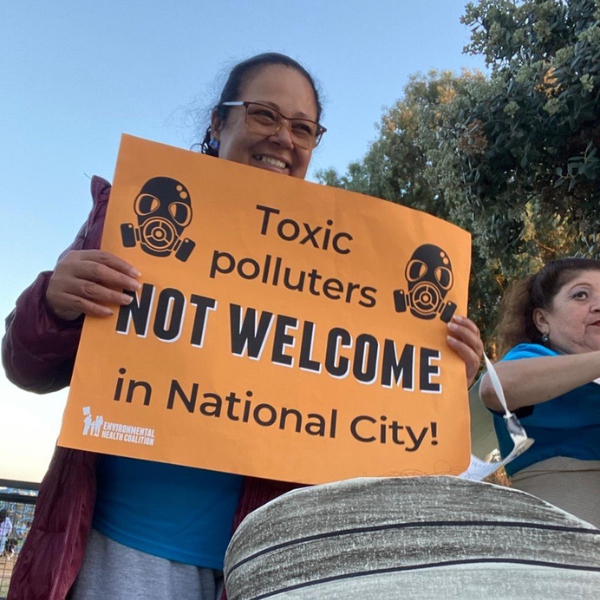
Meet Margarita Moreno, a mother, National City resident, and a dedicated community leader. She has been a part of EHC for the past decade, first as a volunteer and then as a promotora. Now, she is also a member of the newly formed Portside Community Action Team (CAT).
“I first got involved with EHC during a meeting where I learned that it wasn’t right for workshops and industrial facilities to be next to homes, schools, and parks; at the time, that seemed normal to me. However, as time went on, I saw how pollution affects us. I have a son with asthma, and the diesel emissions in our air make it so much worse. A large part of the air pollution in my neighborhood comes from the trucks traveling to and from the Port and warehouses right past my home.”
“We [Portside CAT] want the Port to continue to improve its practices and help transition more and more heavy-duty trucks to zero-emission vehicles so there will be less pollution in our neighborhood. I just want my family and neighbors to have cleaner air so that we can breathe easily and go out for walks without the risk of getting sick.”
If you are interested in learning more about the Portside CAT and how you can join, contact Monserrat Hernández at MonserratH@environmentalhealth.org.
Electrify for Clean Air: Summer Fair
JOIN US! June 6, 2026/ 11 AM – 2 PM/ Pepper Park, National City
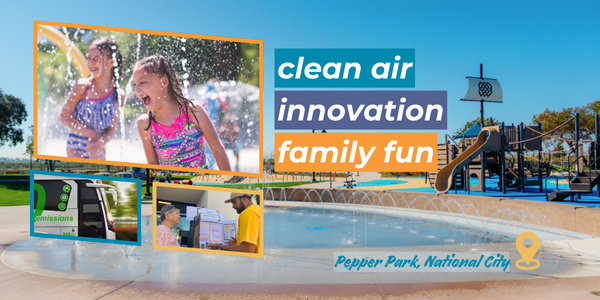
Join us for some family-friendly summer fun at the newly renovated Pepper Park. Come enjoy the new splash pad and play areas with the kids and learn how the Port is electrifying for cleaner air through interactive presentations, including electric cars, trucks, and school buses. Plus, food, raffles, and prizes!
Clean Cargo Project Updates
Out with the fuel, in with the electric
The CCP is a transformative project to reduce harmful air pollution in Portside communities by electrifying Port operations and supporting zero-emission (pollution-free) heavy-duty trucks.
Tenth Avenue Marine Terminal (TAMT)
- On April 21st, the Board of Port Commissioners approved an agreement with SSA Marine to deploy 17 pieces of new all-electric ZE cargo handling equipment, including 1 reach stacker, 11 forklifts, and 5 utility tractor rigs (UTRs), to replace fuel-burning equipment that will be permanently scrapped.
- On February 21st, the Board approved an agreement with Dole Fresh Fruit Company for 10 ZE UTRs.
- On February 21st, the Board also approved:
- Phase 4 of the Tenth Avenue Marine Terminal (TAMT) 12-kV modernization, meaning upgrading the electrical system that loops around the terminal to support the chargers that are needed for the ZE equipment, and shore power systems.
- 12 charging units and supporting infrastructure,
- 1 shore power outlet for commercial harbor craft
Future TAMT projects will be brought to the Board at a future meeting, including the final phases necessary to modernize the 12-kV electrical system, the installation of another 12 charging units, the installation of two shore power outlets for commercial harbor craft, and one shore power outlet for ocean-going vessels will be brought to the Board at a future meeting.
Tidelands Avenue Electric Truck Hub
- On March 16th, the Port closed public comment for the Truck Hub’s draft environmental impact report (EIR). What’s next? The Board will consider certifying the EIR, approve a Coastal Development Permit and lease agreement with Skychargers, the project proponent. The Board will hear public testimony and will vote to approve the project this summer.
National City Marine Terminal
- On February 21st, the Board approved agreements with The Pasha Group for 20 ZE medium-duty shuttle vans, 5 pieces of ZE cargo handling equipment, and 18 charging stations.
He is one of 8 people who can operate the 1st all electric cranes in North America
“So going clean air, it’s a huge, huge benefit, not just for the environment, but for us as the working people from the Local 29 that are working those jobs every day.”
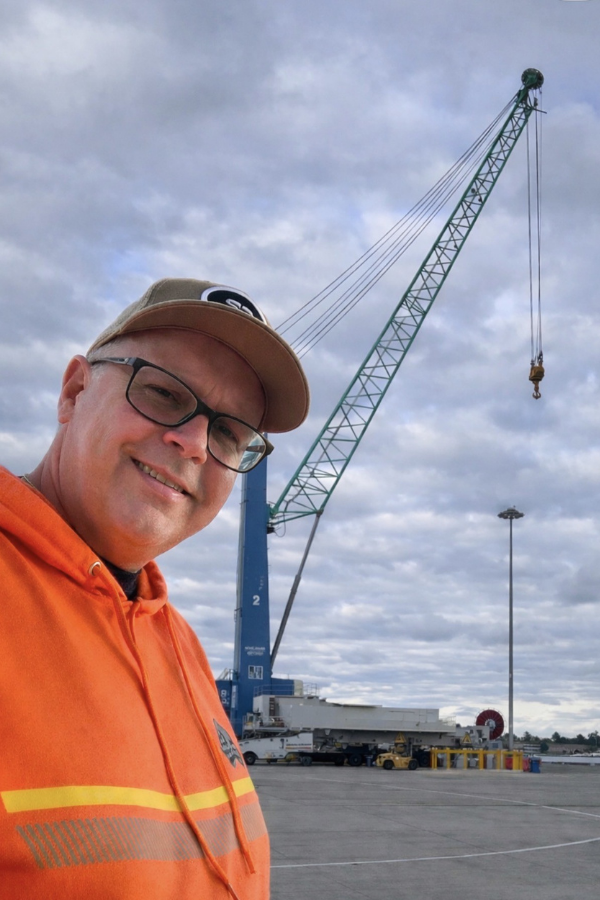
Meet Mike “Bouy” Thomas, one of only eight people in the country certified to operate the all-electric Generation 6 Mobile Harbor Cranes at the Port of San Diego, which are the first of their kind in North America. The two cranes have been fully operating at the Port’s Tenth Avenue Marine Terminal since 2024. We chatted with Bouy about his experience transitioning from operating diesel–polluting cranes to state of the art zero-emission cranes, and the impact he has seen first-hand on his work environment.
Bouy has been a longshoreman with ILWU Local 29 at the Port of San Diego for 20 years and has been operating cranes since 2019.
This interview has been edited for length and clarity
Can you explain what the basic function is of the crane you operate?
Okay, the basic function of the crane is to pick up different types of items from very light to extremely heavy and upwards of 200,000 pounds. (Please note that each crane can individually lift up to 200 metric tons, or 400 metric tons via a tandem lift). From putting a clam bucket on it and lifting bulk and breakbulk materials, like sugar and bauxite to delivering yachts directly to the water.
When you first heard that the Port was going to switch from diesel power cranes to electric/zero-emission cranes, what did you think?
I was excited to get something new that brings different challenges. It’s a newer technology. All of us here at Local 29 have to adapt to those new cranes and learn something new. And it’s a great thing because it’s all about the environment. We work around diesel and since they’ve introduced electric cranes, and lots of other electric machinery, there’s a huge difference in our working environment. We’re not consuming those diesel fumes anymore.
So going clean air, it’s a huge, huge benefit, not just for the environment, but for us as the working people from the Local 29 that are working those jobs every day.
Was it exciting to learn that you would be operating the first all-electric mobile cranes in North America? That means you would be one of the first people to do that?
Right, and it is. The electric cranes are taller, so we sit up higher. The capability is a lot stronger and they’re faster. It’s like sitting in a captain’s chair up there and it’s totally quiet. You can see everything nice and clear. They have cameras on them, and they just run so smoothly. It’s like going from an old model car from the 90s to the most current Ferrari. It’s so much better.
Currently in our local, we only have 8 operators that are certified to operate those mobile cranes, which are the only ones in North America.
What is the biggest difference you have experienced between operating an electric crane vs a diesel one?
Well, one, obviously the biggest one is the emissions, right? Two, it’s just the way the cranes handle, the efficiency, and the sheer power.
They’re better to operate and they’re safer. You get more alarms, notifications, your screens give you much more information, like on your loads, your outreach, meaning when you’re booming down, what the load is, how far you can go out.
The cranes represent the heaviest lift capability of any port crane system currently in place on the U.S. West Coast – up to 400 metric tons (MT) when used in tandem (two used at once). What is it like to control a piece of equipment so powerful?
It’s so powerful. It’s nerve-wracking, to be honest. You’re picking up something that heavy, and you’re going to move it. So, you really don’t have room for errors. When you operate those cranes, you could be doing six different functions at one time. You have to be precise and take your time – slow is fast – so there are no mistakes. That makes it’s safe for all, not just the operator, but also our members who are on the ground that we’re responsible for. We don’t want to have any accidents or injuries to our members on the ground.
What do you like best about operating an electric crane?
What I like best is that it’s quiet. It’s super quiet. You really can hear your thoughts up there.
You can hear the differences, from a safety perspective; you can hear, see, feel anything that might be going on versus a diesel crane where you might have loud noises and vibrations, might block you from that feeling.
So, is there anything I didn’t ask that you’d like people to know?
Well, I would like everybody to know that here in San Diego with our ILW Local 29, not just the crane operators, but all of our members, we are like one team. And to be honest, this is the Port to come to have your stuff done.
And that’s how I feel about those electric cranes.
Upcoming Events
Electrify for Clean Air: Summer Resource Fair
SAVE THE DATE
June 6, 2026, from 11 AM – 2 PM
Pepper Park, 3299 Tidelands Ave, National City, CA 91950
Upcoming Portside Community Action Team (CAT) Meetings
The CAT normally meets on the last Wednesday of every month. Dates and locations are subject to change. For up-to-date information and to attend, please email You can also visit our events calendar, .
- May 27, 2026, 5 PM – 7 PM
- June 24, 2026, 5 PM – 7 PM
- July 22, 2026, 5 PM – 7 PM
- August 26, 2026, 5 PM – 7 PM