

In this interview with Renée Yarmy, LEED AP O+M, the Maritime Sustainability Manager at the Port of San Diego, you learn what shore power and zero-emission cargo handling equipment are and how they improve air quality.
What is shore power?
Shore power is a clean energy solution that allows ships at berth to connect to electricity rather than burning fuel from their auxiliary engines. This helps cut emissions that impact air quality and noise. Essentially, the ship plugs into electricity at the dock. This provides power to everything they might have on a vessel. For example, lights, refrigeration, and heating and cooling systems.
What is zero-emissions cargo handling equipment?
Cargo handling equipment is the machinery that is used at ports and terminals to move cargo. For example, cranes, forklifts, and yard tractors.
When we say that we’re shifting towards zero emissions (ZE) cargo handling equipment, this typically means moving to equipment that runs on electricity. So instead of being powered by fossil fuels like diesel, propane, or gasoline, these ZE technologies produce no exhaust emissions while operating.
How does shore power and ZE cargo handling equipment improve air quality generally?
The Port of San Diego is doing its part to improve air quality in the Portside Communities. Use of ZE equipment and shore power eliminates pollution like diesel particulate matter which can lead to respiratory illnesses and aggravate existing health issues. Cleaner air promotes a safe and healthy environment for workers and community members alike.
Can you share the Port’s clean air and electrification goals?
The Port’s clean air goals are outlined in the Maritime Clean Air Strategy (MCAS) and our Climate Action Plan.
Some of the MCAS goals go beyond the requirements of California’s air quality regulations. One of these goals is to transition 100% of our cargo handling equipment to ZE equipment by 2030. Another goal is to shift 100% of the trucks that serve the Port to ZE vehicles by 2030, with an interim goal of transitioning 40% to ZE by June 30, 2026. We realize this is ambitious since we’re nearly at the June milestone. We’re revisiting how we can continue to advance electric trucks and cargo handling equipment.
We also have goals focused on vessels and harbor craft to facilitate additional shore power systems so that more ships can plug into electricity instead of running their engines while they are at our terminals.
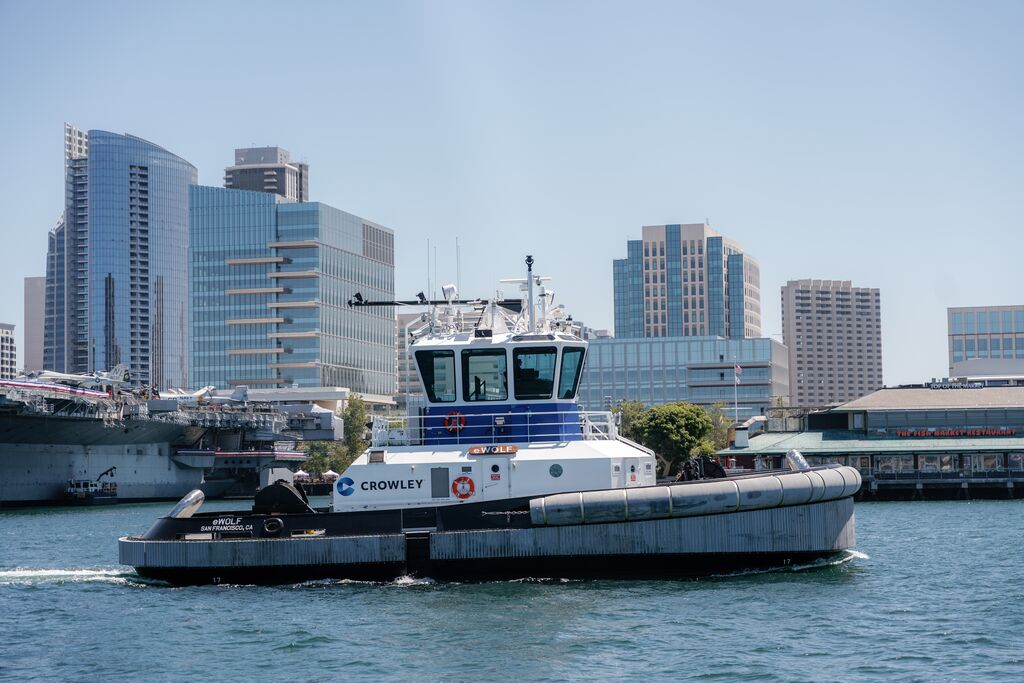
We accomplished our objective to support the implementation of the 1st all electric tugboat in the U.S. by 2026 implemented by Crowley Marine, and the Climate Action Plan goal to reduce GHG emissions by 10% below the 2006 baseline by 2020. As we look out to 2030 and 2050, we’re really looking at how we can realign some of the Climate Action Plan’s goals with the State’s targets.
What is the Clean Cargo Project?
The Port of San Diego’s Clean Cargo Project (CCP) is a transformative project funded by the Environmental Protection Agency (EPA) Clean Ports Program. It is focused on furthering clean air and electrification efforts at our maritime facilities in the Portside communities, which are Barrio Logan, Logan Heights, Sherman Heights, and west National City.
The project is approximately $58.6 million from the EPA, coupled with match funding totaling $27.7 million from the Port, our project partners, and a grant from the San Diego County Air Pollution Control District. The total project value is approximately $86.3 million.
Can you also outline its different phases?
Although the project isn’t really labeled formally as phases, we have three different project locations.
There is the Tenth Avenue Marine Terminal at the north end of the Portside community, adjacent to Barrio Logan. We are upgrading the electrical system that loops around the terminal to support the chargers that are needed for the ZE equipment, as well as the new shore power systems. With the funding, we will install 24 chargers to support the ZE cargo handling equipment, one shore power plug to support ocean-going vessels, and three shore power outlets for commercial harbor craft.
Working a little bit further south, we have our second project site, the proposed Tidelands Avenue Electric Truck Hub. This component of the project is currently going through the environmental review process. It will include 23 charging stations and 25 ZE trucks funded by the EPA grant, committed to serving the Port as part of the project.
Then the third project site is at our National City Marine Terminal. Pasha Automotive Services, a subsidiary of The Pasha Group, is the operator of this facility. About an eighth of the nation’s cars are brought in through this terminal. This project includes 20 ZE medium-duty shuttle vans, as well as five additional pieces of ZE cargo handling equipment and 18 charging stations.
The CCP also includes two other components, a workforce development program and a community outreach initiative, which is led by the Environmental Health Coalition.
How will the Port’s shore power and ZE cargo handling equipment initiatives improve air quality in San Diego’s Portside communities?
Because the three project sites are in the heart of the Portside communities, there’ll be a direct benefit to air quality improvements. We’re going to see the transformation of the majority of the cargo handling equipment at these facilities to zero emission technologies. We’ll also have more vessels at Tenth Avenue Marine Terminal using shore power instead of fuel. All these activities will reduce the air pollutants I brought up before; nitrogen oxide, diesel particulate matter, and GHG emissions.
What steps has the Port taken so far to transition to shore power and ZE cargo handling equipment? Can you share examples of some successes?
A lot of investment to date has been made at the Tenth Avenue Marine Terminal and even Crosby Pier, just south of the terminal, adjacent to the Cesar Chavez Park.
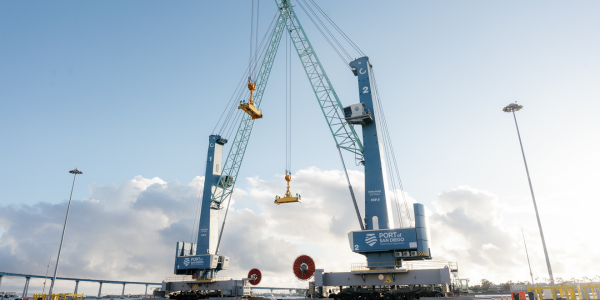
We procured the first all-electric mobile harbor cranes. That means we replaced one of our dirtiest, most polluting pieces of cargo handling equipment with two all-electric mobile harbor cranes – a first in all of North America. This was a significant investment for the Port, with approximately $8.6 million for the supporting infrastructure and $14.7 million to procure the cranes.
As I mentioned before, Crowley built the first electric tug in the United States, which is now supporting the ocean-going vessels that come into the Port.
We’ve also seen a lot of investment at our National City Marine Terminal with the shore power system that we recently completed, marking this as the first shore power system for Roll-on/Roll-off cargo vessels operating in California.We also procured an emissions capture control system, or what we call a bonnet, for vessels not capable of shore powering. This system offers another significant emissions reduction benefit. We are using this bonnet primarily at the National City Marine Terminal.
About 20% of the Port’s fleet has also transitioned to ZE.
Since implementing electrification and ZE technologies, what air quality improvements have been achieved in the Portside community?
Since our baseline of 2019, we’ve seen an overall 46% reduction in diesel particulate matter, a 32% reduction in NOx, and a 10% reduction in GHG emissions across all three of the Port’s terminals.
We’re going to continue to track our achievements on an annual basis to ensure that we’re making additional progress in these three areas of air quality.
How were the emission reduction numbers calculated?
The Port brings on a consulting team to prepare emissions inventories, which involves evaluating all maritime activities at the Port that produce emissions. For example, how many ships were in, how long were they in for, did they connect to any shore power technology, etc. We also inventory all the equipment operating at the terminals and the number of hours or amount of fuel consumed over a full year, the size (horsepower) and age of the engine and other factors. All the activity-based data is used to calculate how much air pollution is generated from the various maritime activities (ships, cargo handling equipment, trucks, etc.).
All this information goes into an inventory model prepared by our contractors, followed by quality assurance and quality control review with Port staff.
When we do these calculations, we refer to industry standards that have been created across the port industry or within the state.